

Why Do Lighting Fixtures Matter More Than Most Buyers Expect?
Choosing the right Lighting Fixtures is not only about appearance. For many buyers, the real challenge begins after installation: uneven light diffusion, cracked housings, poor heat resistance, unstable dimensions, difficult assembly, and inconsistent quality between batches. These issues can slow down production, increase returns, and damage the end user experience.
This article explains what practical buyers should really look for when sourcing Lighting Fixtures, how material and manufacturing decisions affect long-term performance, and why a capable production partner can reduce both technical risk and cost pressure. Drawing on the manufacturing experience of Ningbo P&M Plastic Metal Product Co., Ltd., we will walk through the common pain points, the core selection standards, and the questions worth asking before you place your next order.
Article Summary
Buyers often focus on price first, but the real value of Lighting Fixtures comes from material stability, optical performance, structural precision, weather resistance, and production consistency. A fixture that looks acceptable in a sample can still fail in mass production if mold design, resin selection, or assembly tolerances are not controlled carefully. This article breaks down the most common sourcing problems, compares material options, highlights the features that matter for indoor, outdoor, and commercial projects, and explains how a dependable manufacturer helps buyers protect delivery schedules and product quality.
Table of Contents
- Article Outline
- What Problems Do Buyers Usually Face When Sourcing Lighting Fixtures?
- What Makes a Lighting Fixture Perform Well in Real Applications?
- Which Materials Are Commonly Used for Lighting Fixtures?
- How Do Different Application Scenarios Change Fixture Requirements?
- Why Does Mold Quality Affect the Final Fixture So Much?
- How Can Buyers Evaluate a Manufacturer More Effectively?
- What Can a Reliable Manufacturing Partner Actually Improve?
- FAQ
- Final Thoughts
Article Outline
- Introduction to the hidden costs behind poor fixture selection
- Common buyer pain points in product quality and project execution
- Key performance factors including optical effect, durability, and fit
- Material comparison for plastic lighting components
- Differences between indoor, outdoor, and commercial needs
- Why tooling and mold precision directly shape product consistency
- How to screen a manufacturer before committing to volume production
- Frequently asked questions from practical buyers
What Problems Do Buyers Usually Face When Sourcing Lighting Fixtures?
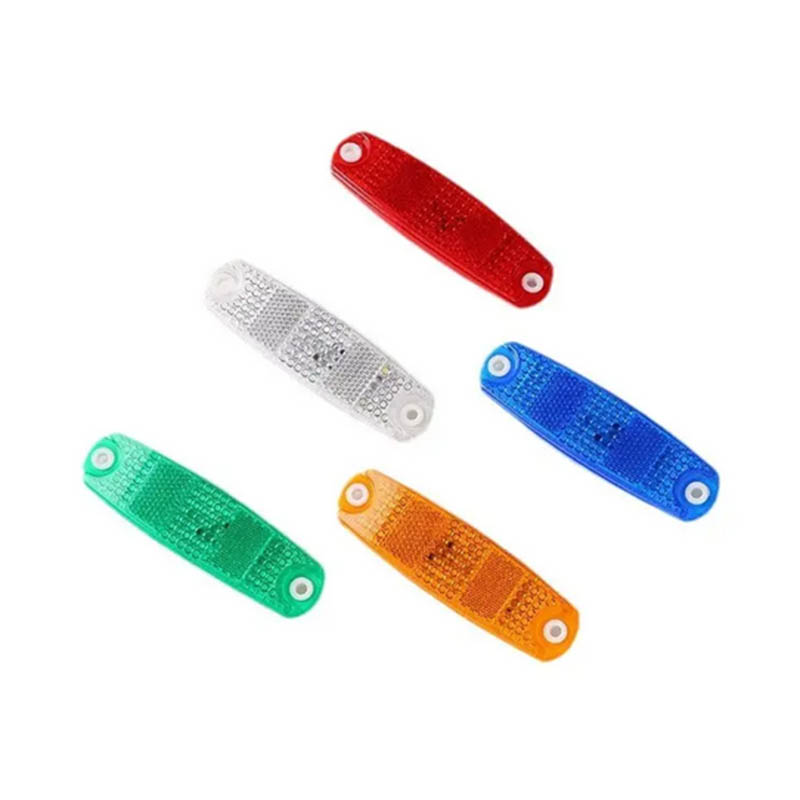
Many purchasing teams are under pressure to move fast. They may receive an attractive quotation, approve a sample, and assume the job is safe. But Lighting Fixtures often involve more technical detail than expected. Once production begins, small weaknesses become expensive problems.
The most common pain points include poor light transmission, color inconsistency, visible flow marks on transparent parts, fragile housings, weak snap-fit structures, inaccurate dimensions, and limited weather resistance. In many cases, the fixture does not fail because the design idea was wrong. It fails because the manufacturing process was not matched correctly to the product’s real use conditions.
- Samples look fine, but mass production shows unstable dimensions
- Plastic parts yellow too quickly under heat or UV exposure
- Lampshades diffuse light unevenly and create visible hotspots
- Assembly takes longer because components do not fit reliably
- Outdoor parts become brittle after long-term exposure
- Lead times slip because mold adjustments were underestimated
This is why experienced buyers do not ask only, “Can you make this?” They ask, “Can you make this consistently, efficiently, and at the quality level our market expects?”
What Makes a Lighting Fixture Perform Well in Real Applications?
A high-quality Lighting Fixtures product must balance appearance, function, and manufacturability. These three areas should support each other, not fight each other. If a fixture looks elegant but deforms under heat, the design has not succeeded. If it is durable but difficult to assemble, the total project cost goes up anyway.
| Performance Factor | Why It Matters | Buyer Impact |
|---|---|---|
| Optical performance | Controls diffusion, brightness uniformity, and visual comfort | Improves end user satisfaction and reduces complaints |
| Heat resistance | Helps maintain shape and performance near light sources | Protects service life and product safety |
| Dimensional precision | Ensures stable assembly and proper fit with other components | Reduces rework and assembly delays |
| Surface quality | Affects appearance, transparency, and brand image | Supports premium positioning in the market |
| Weather resistance | Important for outdoor exposure to UV, rain, and temperature shifts | Lowers failure risk in field use |
| Production stability | Supports repeatable output across multiple batches | Protects delivery plans and procurement confidence |
When these elements are controlled together, the fixture delivers value beyond the initial purchase. It becomes easier to install, easier to maintain, and more dependable throughout the product lifecycle.
Buyers who skip this technical review stage often end up paying more later through warranty claims, shipment delays, replacement costs, or repeated mold modification.
Which Materials Are Commonly Used for Lighting Fixtures?
Material choice is one of the biggest decisions in any Lighting Fixtures project. Different resins create different results in clarity, impact strength, weather resistance, and cost. There is no universal “best” option. The better question is whether the material matches the application.
For many plastic lighting components, buyers commonly consider PC, PMMA, ABS, and PP. Each has strengths, but each also demands the right design and processing approach.
| Material | Main Advantage | Typical Use Direction | Things to Watch |
|---|---|---|---|
| PC | Strong impact resistance and good heat performance | Covers, housings, outdoor applications | Processing must be controlled carefully for optical parts |
| PMMA | High transparency and attractive surface finish | Lenses, decorative diffusers, visible covers | Less impact resistant than PC |
| ABS | Good balance of strength, processability, and cost | Structural housings and non-transparent parts | Not ideal when high transparency is required |
| PP | Lightweight and cost-effective for selected parts | Certain internal or functional components | Application fit must be verified case by case |
A serious manufacturer should not push one material blindly. The better approach is to review the light source, heat conditions, installation environment, appearance target, and expected service life before finalizing the resin. That is where practical engineering support becomes valuable.
How Do Different Application Scenarios Change Fixture Requirements?
Not all Lighting Fixtures are expected to do the same job. A decorative indoor lamp, an outdoor wall light, and a commercial fixture installed in a high-traffic environment face very different demands. Buyers should evaluate the product according to the real operating scenario instead of using a single standard for every project.
-
Indoor applications
These often prioritize appearance, light softness, dimensional neatness, and stable assembly. Surface finish and consistency become especially important when the fixture will be visible at close range. -
Outdoor applications
These need stronger resistance to UV exposure, moisture, impact, and temperature change. The material and mold design must support long-term durability instead of short-term appearance only. -
Commercial applications
These usually require a balance of visual quality, repeatable output, and dependable supply. Buyers may need tighter tolerances, stronger production management, and better batch-to-batch consistency.
This is also why customization matters. A fixture that performs well in one environment may not be the best fit in another. The right supplier helps buyers adjust design details early, before those details become expensive corrections.
Why Does Mold Quality Affect the Final Fixture So Much?
Buyers sometimes treat mold work as a separate technical issue, but for plastic Lighting Fixtures, mold quality is directly tied to the final product result. A well-designed mold supports stable dimensions, clean surfaces, efficient cycle times, and consistent repeatability. A weak mold does the opposite.
Transparent and semi-transparent lighting parts are especially sensitive. Even minor processing issues can show up as visible defects. If the gate location, cooling layout, venting, or polishing standard is not appropriate, the fixture may show streaks, warpage, bubbles, or uneven optical effect.
- Accurate mold design helps reduce visible defects
- Better tooling improves repeatability in volume production
- Stable mold performance supports faster and smoother assembly
- Thoughtful engineering lowers the need for late-stage rework
- Longer mold life protects the buyer’s ongoing production plan
In practical sourcing, this means one thing: the fixture supplier should not only promise a good product. They should also understand how mold design and process control create that product reliably over time.
How Can Buyers Evaluate a Manufacturer More Effectively?
A strong supplier relationship starts with better questions. When reviewing a potential manufacturer for Lighting Fixtures, buyers should look beyond brochure language and ask about actual production capability.
Useful evaluation points include engineering communication, mold development experience, material familiarity, dimensional control, sample verification, and after-sales responsiveness. A qualified partner should be able to explain not just what they make, but how they reduce risk throughout the project.
| Evaluation Point | What Buyers Should Look For |
|---|---|
| Project understanding | Can the supplier identify the key risks in your application quickly and clearly? |
| Material knowledge | Can they explain why a certain resin fits your fixture instead of offering a generic answer? |
| Tooling capability | Do they have real experience with mold development for lighting-related plastic parts? |
| Quality control | How do they manage consistency during sampling and mass production? |
| Production communication | Will they provide timely updates when a project needs technical adjustment? |
| Long-term support | Can they assist with optimization, troubleshooting, and future modifications? |
For buyers who want a smoother process, this kind of supplier evaluation is often more valuable than chasing the lowest initial quote.
What Can a Reliable Manufacturing Partner Actually Improve?
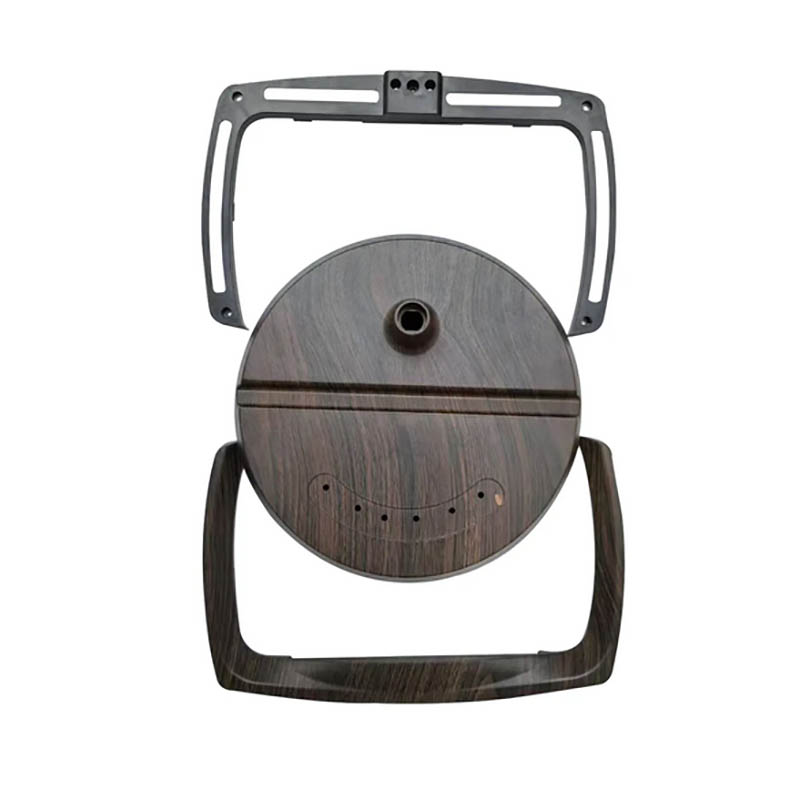
A dependable supplier does more than ship parts. In a real Lighting Fixtures project, they can improve design feasibility, reduce production uncertainty, and help protect your delivery schedule. That matters because fixture sourcing usually touches multiple priorities at once: performance, cost, appearance, lead time, and brand reputation.
Ningbo P&M Plastic Metal Product Co., Ltd. focuses on plastic and mold manufacturing solutions that support lighting-related components across indoor, outdoor, and commercial use directions. For buyers, that kind of background can be valuable when a project needs both product understanding and practical production execution.
The best partnerships usually create benefits in four areas:
- Better product confidence through more suitable material and tooling decisions
- Better cost control by avoiding repeated modification and unstable yields
- Better project speed through clearer communication and organized development steps
- Better long-term consistency for repeat orders and brand growth
When buyers view fixtures as engineered products rather than simple commodity parts, they usually make stronger purchasing decisions and achieve better final results.
FAQ
1. What should I focus on first when buying Lighting Fixtures?
Start with the actual application. Installation location, light effect, structural demands, and environmental exposure should guide material and production decisions before price comparison.
2. Are plastic Lighting Fixtures durable enough for professional use?
Yes, when the right material and manufacturing process are selected. Durability depends on design logic, resin choice, mold precision, and the real conditions of use.
3. Why do samples and mass production sometimes look different?
This usually happens when process consistency, tooling stability, or quality control is not strong enough. A good sample alone does not guarantee stable batch output.
4. Which material is better for transparent or diffused lighting parts?
It depends on the target. PC and PMMA are often considered for this type of application, but the final choice should match the optical, thermal, and impact requirements of the project.
5. Why is mold development so important for Lighting Fixtures?
Mold quality affects appearance, fit, efficiency, repeatability, and long-term cost. For lighting parts, it is one of the most important factors behind successful mass production.
6. Can one supplier handle both custom molds and fixture component production?
In many cases, yes. Working with a supplier that understands both tooling and production can improve communication and reduce project risk.
Final Thoughts
The right Lighting Fixtures solution should make your project easier, not more complicated. If you are evaluating a new lighting component, developing a custom fixture, or looking for a manufacturing partner that can support both tooling and production, Ningbo P&M Plastic Metal Product Co., Ltd. is ready to help you move from concept to dependable output.
If you want clearer answers, better production support, and a smoother sourcing process, contact us today to discuss your project requirements and discover a more reliable way to build your next lighting fixture solution.
Contact Us