

Beyond Shape: How Surface Textures and Colors Are Achieved in Custom Plastic Products
Beyond Shape: How Surface Texture and Color are Achieved in Custom Plastic Parts
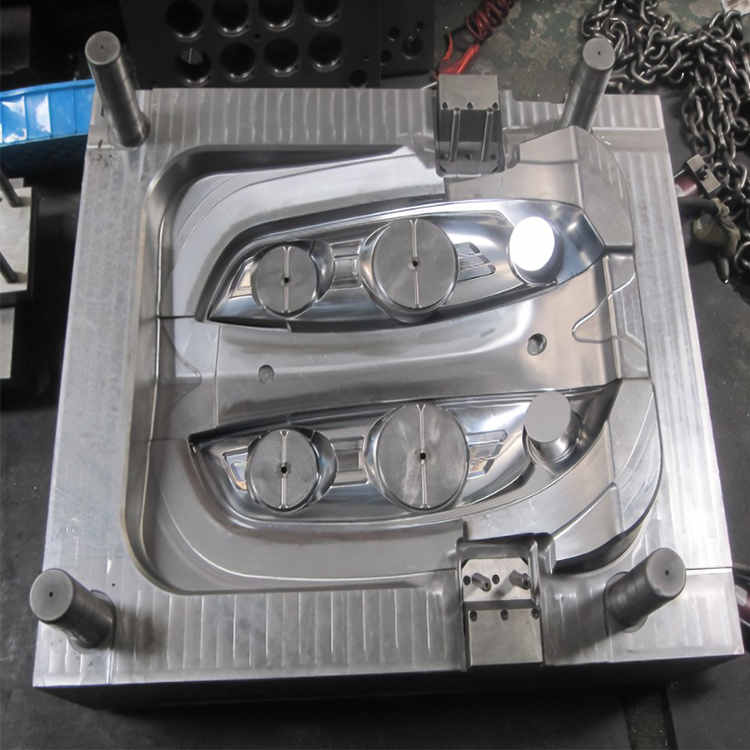
In a mold factory in Dongguan, Guangdong, a seemingly ordinary block of mold steel undergoes a precise "tattoo." Tens of thousands of micron-level dimples are being etched onto its surface, destined to be replicated onto countless products. This is just the beginning of the allure of customization.
When people discuss custom plastic products, unique shapes and structures often come to mind first. However, what truly makes a product stand out, conveying a sense of premium quality or specific functionality, are often the visible surface textures and precise colors.
The realization of these elements goes far beyond simple painting or film application. They are deeply rooted in the core of mold technology and materials science.
01 The Sculpting of a Surface: The Mold Mystery Behind Texture
The source of a product's fine matte finish, leather grain, wood grain, geometric patterns, or even anti-slip bumps lies in the treatment of the mold cavity surface.
The mainstream and economical method for creating texture is chemical etching. Technicians transfer a designed pattern onto the mold steel surface using a photoresist film. A chemical solution then selectively corrodes the exposed areas, engraving precise textures into the steel.
The etching depth typically ranges from a few micrometers to several tens of micrometers. Different depths and shapes produce entirely different tactile feels and light reflection effects. The etching process for a mold with complex textures can take several weeks.
For higher precision or special three-dimensional textures, laser engraving or Electrical Discharge Machining (EDM) is employed. Lasers can create extremely fine microstructures, often used for optical light guides or anti-counterfeiting marks. EDM can produce textures with steep sidewalls. These textures are directly replicated onto the product, are wear-resistant, and offer an authentic touch.
02 The Alchemy of Color: From Masterbatch to Uniform Presentation
The color of plastic is not applied afterward but is uniformly presented from the inside out during the molten state. This relies on a precise color matching and dispersion system.
The soul of color is the masterbatch—high-concentration coloring pellets made from a pre-mixed blend of high-ratio pigments, dyes, and carrier resin. Color matching engineers, akin to pharmacists, mix different masterbatches with base resins (like ABS, PP, PC) in precise proportions according to Pantone codes or physical samples.
The key lies in dispersion. Pigments must be completely and uniformly dispersed within the plastic melt. Any minor agglomeration can lead to "color spots" or uneven coloration on the product surface. This requires high-quality masterbatches and an injection molding machine screw with sufficient mixing and shear capability.
Furthermore, the inherent properties of the material affect color. Transparent, translucent, or opaque substrates yield drastically different color presentations. For example, achieving a pure sapphire blue in transparent PC requires a completely different formula and process than achieving the same visual blue in white PP.
03 The Interaction of Texture and Color: An Advanced Challenge
When texture and color combine, a "visual enhancement" effect occurs. For instance, the same red will appear to have different brightness and saturation to the human eye when presented on a glossy surface versus a fine textured (e.g., grained) surface.
Dark textures (like dark gray leather grain) can better conceal inevitable process marks such as parting lines and ejector pin marks, enhancing the product's appearance. A high-gloss mirror finish, however, makes near-perfect demands on mold polish grade, material purity, and injection molding process control, as any flaw will be glaringly exposed.
More challenging is achieving precise correspondence between textured areas and colored areas. For example, on a single product, requiring the logo to be a glossy mirror finish in red, while the rest of the area is a matte black. This typically requires complex mold design, such as using inserts or special two-shot injection molding processes, to combine plastics of different textures and colors within the mold.
04 Beyond Aesthetics: Functional Texture and Color
The value of texture and color extends beyond beauty. Anti-slip textures are widely used on tool handles and phone case edges; subtle leather grains can mask daily wear scratches; specific surface textures can alter light refraction to achieve soft light or light-guiding functions.
Color also plays a functional role. In electronics, black is often used for internal structural parts because it better conceals internal components and resists static electricity; bright colors are used for children's products or sports equipment, conveying vibrancy and safety; medical devices often use soft, non-reflective colors to reduce patient anxiety.
Some high-end applications even achieve "structural color" through precise textures—that is, producing specific colors solely through the interference of light with surface micro-nano structures, without the need for pigments. This type of color is environmentally friendly and never fades.
05 The Future of Customization: Digital and Agile Manufacturing
As market demand grows for small-batch, personalized customization, the technologies for realizing texture and color are also innovating.
The digital processing of mold textures (e.g., direct laser texturing) is shortening development cycles. Digital texture libraries allow designers to quickly call up and modify texture schemes, much like choosing a font.
In terms of color, cloud-based intelligent color matching systems can respond to needs more rapidly and ensure precise color quality control across different factories globally using spectrophotometers.
One of the most promising directions is the paint-free aesthetic solution. By using special pearl-effect masterbatches, metallic-effect masterbatches, or the base material itself (like colored ABS), combined with corresponding mold textures, high-appearance parts can be directly injection molded, eliminating the painting step. This is more environmentally friendly and cost-effective.
When fingertips glide over the fine matte surface of a phone case, or when one is drawn to the elegant matte color of an appliance, what we are experiencing is the symphony played by the micron-level engraving art on the injection mold and the precise chemistry of the material formula.
The surface texture and color of custom plastic parts represent the ultimate dialogue between design intent and manufacturing craftsmanship. They transform cold functional components into products with warmth and character, quietly communicating quality, brand story, and even sustainable values.
In this era where consumers increasingly focus on detailed experiences, the mastery of surface texture and color is becoming the key differentiator for manufacturing transitioning from "able to make" to "skilled at creating." It proves that true customization lies in every shift of light and shadow and in the feedback from every touch.