

From 3D Printing to Production Molds: How Your Prototype Design Reaches the Market
An exquisitely designed plastic prototype rests quietly on a designer's workbench. Between it and the thousands of products destined to fill store shelves lies a chasm known as the "mold." This gap has been the graveyard of countless creative ideas.
In the studio of a Shanghai startup, industrial designer Li Wei is carefully examining a 3D-printed prototype in her hand—an ergonomic pet feeder.
"We've iterated this prototype 17 versions," she says, gently rotating the sample. "But to sell it on online platforms, we need to produce at least 5,000 units."
From a single piece to batch production, from design to commodity, the most crucial step on this path is bridging the manufacturing gap from 3D printing to injection molding mass production.
01 The Value and Limitations of Prototypes
3D printing has revolutionized prototyping. Designers can now transform ideas into physical entities within days or even hours, at a fraction of the traditional cost.
This technology allows for rapid iteration. Li Wei's team tested different angles, capacities, and material effects for the pet feeder over two months. "We even printed a transparent version to observe the internal structure," she says, pointing to the colorful prototypes on the workbench.
However, 3D printing has insurmountable limitations. The material cost per prototype can be dozens of times higher than that of an injection-molded product, and the production speed is on an entirely different scale—it takes 6 hours to 3D print one feeder, while an injection molding machine can produce 8 every 30 seconds.
"The more critical issue is the performance difference," explains veteran manufacturing engineer Chen Jianguo. "The layer-by-layer structure of 3D printing results in anisotropy, whereas injection-molded products have better integrity and higher strength."
02 The Critical Decision in Bridging the Gap
When moving from prototype to mass production, the first critical decision designers face is: When to create the mold?
Creating a mold signifies an upfront investment ranging from tens to hundreds of thousands of RMB, posing a significant risk for startup teams. "We've seen too many designs fail because the mold was created too early or too late," Chen says.
The criteria for this decision include design maturity, market demand validation, and production scale forecasting. Li Wei's team decided to invest in the mold only after securing over 3,000 pre-orders for their product.
Design optimization before mold creation is equally crucial. Designers must consider the requirements of the injection molding process: uniform wall thickness, appropriate draft angles, and sensible parting line locations.
"Many beautiful 3D-printed prototypes would fail if directly used for mold creation," Chen points out. "For example, the initial design of this feeder had too many right angles and thickness variations. We suggested 23 modifications to adapt it for injection molding production."
03 The Mold: Paving the Way for Mass Production
The mold is the core tool for injection molding mass production and the largest upfront investment. A simple single-cavity mold might cost 30,000 to 80,000 RMB, while a complex multi-cavity mold can run into hundreds of thousands.
Mold manufacturing itself is a precision engineering process. Modern mold factories use CNC machine tools, electrical discharge machining (EDM), and deep-hole drilling equipment to process blocks of specialty steel into molds with accuracies reaching 0.005 millimeters—one-tenth the diameter of a human hair.
"The mold isn't just for copying the prototype; it's for optimizing the production process," says mold designer Zhao Feng. "We need to consider gate location, cooling systems, and ejection mechanisms to ensure every cycle efficiently produces qualified products."
The mold's lifespan directly impacts the per-unit product cost. A high-quality mold can produce millions of products, amortizing the mold cost to possibly just a few cents per item.
04 Trial Molds and Adjustments
Once the first mold is completed, the real test begins. Trial molding is a key phase for verifying mold design and adjusting injection molding parameters, typically requiring 3 to 5 iterations.
"The first trial run often reveals various problems," Chen recalls of Li Wei's team's experience. "Their feeder initially had issues with shrinkage and noticeable weld lines."
By adjusting injection parameters—temperature, pressure, speed, and time—engineers gradually optimize the production process. Simultaneously, the mold itself might require fine-tuning, such as polishing surfaces to improve finish or modifying cooling channels for better efficiency.
Li Wei witnessed the entire trial molding process. "Watching the first injection-molded feeder being ejected from the mold felt completely different from 3D printing—it was sturdier, had a more uniform texture, and felt more like a 'real' product," she says.
05 The Economics of Material Selection
The shift from 3D printing to injection molding also brings a fundamental change in material selection. 3D printing commonly uses dedicated filaments like PLA or ABS, while injection molding offers a wider range of engineering plastics with different cost structures.
"We ultimately chose food-grade PP (polypropylene) material," Li Wei explains. "It's not only safe but also costs much less than 3D printing materials and has better molding properties."
Material cost constitutes a significant portion of injection molding production. Optimizing design to reduce material usage and selecting cost-effective material suppliers can directly impact the product's market competitiveness.
Large-scale production also makes material recycling feasible. Sprue runners and defective parts generated during injection molding can be crushed and reintroduced into production at a certain ratio, further reducing costs.
06 Production Rhythm and Quality Control
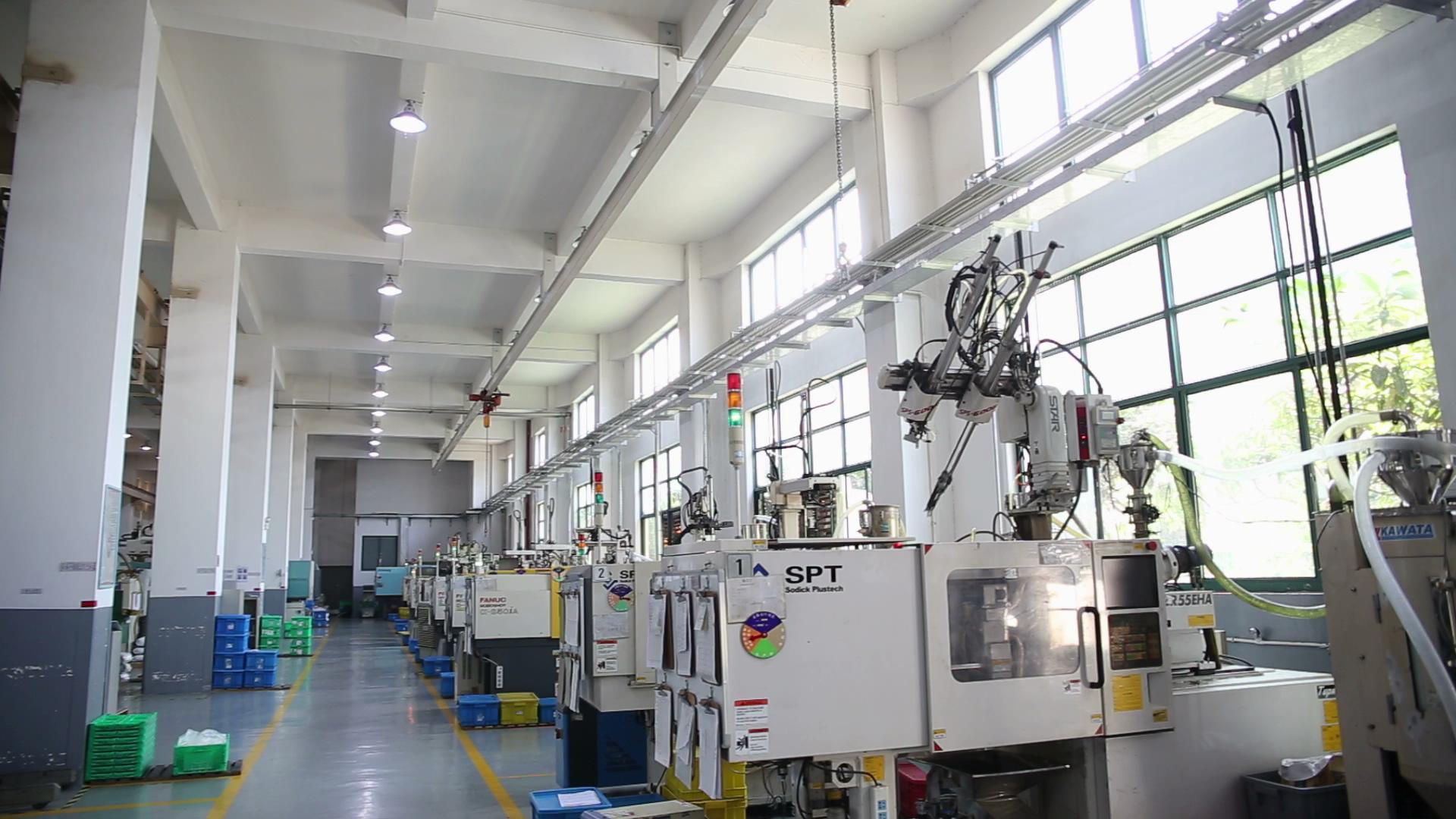
Upon entering mass production, production rhythm and quality control become critical. A medium-sized injection molding machine can produce tens of thousands of feeders daily. How is each product ensured to meet standards?
Modern injection molding workshops are equipped with various monitoring methods: sensors monitor injection pressure and temperature in real-time; vision systems inspect each product for surface defects; and regular sampling is conducted for dimensional measurement and functional testing.
"We've established three inspection points on the production line," Chen says. "Only products passing all inspections are packaged and stored."
Quality control is not only about product consistency but also affects brand reputation. A production line with well-controlled defect rates can save a brand significant after-sales costs.
07 The Path to Market
When the first batch of injection-molded pet feeders comes off the production line, their journey to the market is just beginning.
Packaging design must consider protection during transportation and appeal in retail environments. Li Wei's team specially designed packaging with a window to showcase the feeder's features. "Consumers can intuitively see the feeder's angle and texture," she says.
Logistics and inventory management present new challenges after mass production. "We need to balance production speed, inventory costs, and market demand," Li Wei notes. "This is a completely different consideration from prototyping."
The transition from a 3D-printed prototype to an injection-molded mass product is not just a change in manufacturing methods but a shift in mindset. Designers need to move from creating single, exquisite objects to designing efficiently producible, market-competitive goods.
From the humming 3D printer in Li Wei's studio to the rhythmically operating injection molding machines in the factory; from the unique prototype on the workbench to the thousands of neatly stacked products in the warehouse—each step on this path requires different expertise and decisions.
The mold is a bridge for creativity, connecting design and market, prototype and product. It requires a substantial investment but is an essential path for transforming a good idea into a viable business.
In the first week after the pet feeder launched, Li Wei's team received their first user feedback. "One customer said this feeder works much better than the ones she used before, and her cat finally stopped scattering food everywhere," Li Wei says with a smile.
At this moment, the journey that began with a 3D printer finally reaches its rightful destination—fulfilling real needs in the real world.