

Which Materials and Molding Processes Make Heat-Resistant Steam Oven Plastic Parts Reliable?
Heat-resistant steam oven plastic parts must withstand high temperatures, continuous moisture, repeated heating and cooling, and regular cleaning without losing their structural integrity. Choosing the right resin and injection molding process is essential for producing durable components with accurate dimensions and reliable performance. This article explores suitable engineering plastics, important design considerations, manufacturing processes, quality inspection methods, and practical sourcing advice for buyers seeking customized steam oven plastic parts.
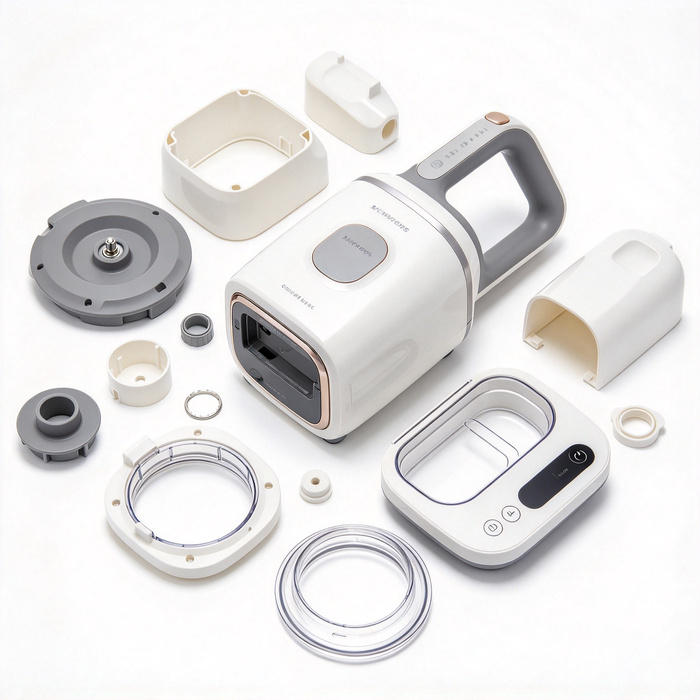
Table of Contents
- Introduction: The Challenges of Steam Oven Plastic Components
- What Performance Requirements Should These Parts Meet?
- Which Plastic Materials Are Suitable for Steam Oven Applications?
- How Does Injection Molding Produce Reliable Components?
- Essential Design Considerations for Heat-Resistant Plastic Parts
- Common Applications in Steam Oven Assemblies
- Quality Control and Performance Testing
- Common Manufacturing Problems and Their Solutions
- How to Choose a Custom Plastic Parts Manufacturer
- Frequently Asked Questions
- Conclusion
1. Introduction: The Challenges of Steam Oven Plastic Components
Steam ovens operate in a demanding environment where elevated temperatures and moisture are present simultaneously. Unlike ordinary household plastic products, their internal components may experience repeated exposure to hot steam, condensation, thermal cycling, mechanical loads, and cleaning agents.
These operating conditions create significant challenges for plastic component manufacturers. A material that performs well at room temperature may become softer, lose stiffness, deform, or develop cracks after prolonged exposure to heat and moisture. Even small dimensional changes can affect assembly accuracy, sealing performance, and the overall reliability of an appliance.
Heat-resistant steam oven plastic parts molding therefore requires more than simply selecting a resin with a high temperature rating. Material properties, component geometry, mold construction, injection parameters, and actual operating conditions must work together.
For appliance manufacturers and industrial buyers, the objective is to obtain plastic components that combine thermal stability, moisture resistance, mechanical strength, dimensional accuracy, and cost-effective mass production.
A well-developed molding solution can help reduce premature component failure, improve product consistency, simplify assembly, and support the long-term performance of steam ovens.
2. What Performance Requirements Should These Parts Meet?
Before starting material selection or mold development, manufacturers should understand the actual conditions that each component will encounter. Different parts inside the same steam oven may have very different performance requirements.
2.1 High-Temperature Resistance
Heat resistance is one of the most important considerations. Plastic parts may be positioned near heating elements, steam outlets, water circulation systems, or hot internal surfaces.
When temperatures exceed a material's practical service capability, several problems can occur:
- Softening or deformation under mechanical loads.
- Loss of dimensional accuracy around mounting points.
- Reduced stiffness and load-bearing capacity.
- Changes in fit between connected components.
- Premature aging after repeated heating cycles.
Material selection should consider continuous operating temperature, short-term temperature peaks, applied stress, and expected service life rather than relying on a single heat-resistance figure.
2.2 Resistance to Steam and Moisture
Steam exposure introduces a challenge that dry heat testing alone cannot fully evaluate. Hot moisture can affect polymer structures, especially in materials with limited resistance to hydrolysis.
Repeated exposure may contribute to reduced mechanical properties, cracking, or dimensional changes. A suitable resin should be evaluated under conditions that reflect the appliance's actual steam temperature, exposure duration, and operating frequency.
2.3 Chemical and Cleaning Resistance
Steam oven components may come into contact with detergents, food residues, oils, and cleaning solutions. These substances can affect the surface or internal properties of certain polymers.
Manufacturers should confirm compatibility with the cleaning products and maintenance procedures specified for the finished appliance.
2.4 Mechanical Strength and Dimensional Stability
Plastic brackets, supports, connectors, and housings must retain their shapes while carrying loads or maintaining connections. Dimensional stability is particularly important for snap-fit structures, threaded interfaces, and components that need accurate alignment.
Practical consideration: A successful material specification should address heat, steam, chemicals, mechanical loading, and dimensional stability together. Passing a temperature test alone does not guarantee reliable performance in a working steam oven.
3. Which Plastic Materials Are Suitable for Steam Oven Applications?
Different engineering plastics offer different combinations of thermal resistance, mechanical properties, moisture performance, processability, and cost. The most suitable option depends on the location and function of the component.
3.1 PPSU (Polyphenylsulfone)
PPSU is a high-performance engineering thermoplastic known for its toughness and resistance to hot water and steam. It is a strong candidate for applications involving repeated exposure to elevated temperatures and moisture.
Potential advantages include:
- Good resistance to repeated hot-water and steam exposure.
- High impact resistance compared with many other high-temperature plastics.
- Useful dimensional stability under appropriate operating conditions.
- Suitability for demanding fluid-handling and appliance applications.
PPSU may be considered for selected steam-related fittings, connectors, housings, and structural components. However, the exact grade must be evaluated for the required temperature, loading, cleaning chemicals, and regulatory requirements.
3.2 PES (Polyethersulfone)
PES offers high heat resistance and good steam resistance. Certain grades are suitable for food-related applications and components that experience repeated hot-water exposure.
Its combination of thermal performance and mechanical stability makes it worth considering for selected steam oven structures and functional parts. Grade-specific documentation is essential, particularly where direct or indirect food contact is involved.
3.3 PPS (Polyphenylene Sulfide)
PPS is a semi-crystalline engineering plastic with excellent thermal and chemical resistance. Reinforced grades can provide high stiffness and dimensional stability, making them useful for demanding structural and mechanical applications.
Typical considerations include:
- Good resistance to many chemicals.
- Low moisture absorption.
- High stiffness, particularly in glass-fiber-reinforced grades.
- Good dimensional stability in appropriately designed components.
Designers should pay attention to brittleness, weld-line strength, fiber orientation, and potential warpage when using reinforced PPS.
3.4 PEEK (Polyether Ether Ketone)
PEEK is an advanced engineering thermoplastic offering exceptional thermal performance, mechanical strength, wear resistance, and chemical resistance.
It can be considered for specialized steam oven components exposed to particularly demanding temperatures or mechanical conditions. Nevertheless, its relatively high material cost means that it is generally more appropriate for applications where its performance advantages justify the investment.
3.5 High-Performance Polypropylene and Other Engineering Plastics
Selected polypropylene grades may be suitable for appliance components exposed to moderately hot and wet environments. Their affordability and processability can be attractive for less demanding applications.
Other materials, including reinforced polyamides and polyesters, may also be considered when their specific grade properties match the application. However, moisture absorption and hydrolysis resistance must be carefully evaluated for prolonged steam exposure.
| Material | Main Advantages | Potential Applications | Important Considerations |
|---|---|---|---|
| PPSU | Toughness and steam resistance | Steam fittings and connectors | Grade selection and chemical compatibility |
| PES | Heat resistance and steam performance | Selected hot-water and steam components | Application-specific qualification |
| PPS | Stiffness and chemical resistance | Structural parts and mechanical housings | Weld lines and impact performance |
| PEEK | High thermal and mechanical performance | Specialized high-temperature parts | Higher material cost |
| PP | Cost efficiency and moisture resistance | Less demanding appliance components | Temperature and load limitations |
| Reinforced PA | Strength and stiffness | Selected brackets and mechanical parts | Moisture absorption and hydrolysis |
There is no universal best resin for every steam oven component. The final decision should be based on the exact resin grade, supplier technical data, actual service conditions, and prototype testing.
4. How Does Injection Molding Produce Reliable Components?
Injection molding is widely used to manufacture complex plastic components with consistent dimensions and repeatable production quality. For heat-resistant steam oven parts, process control is especially important because high-performance engineering plastics may require carefully controlled processing conditions.
4.1 Material Preparation
Some engineering plastics are sensitive to moisture during processing. Improper drying can cause hydrolytic degradation, surface defects, bubbles, or reduced mechanical properties.
Manufacturers should follow the resin supplier's recommendations for drying temperature, drying time, and acceptable moisture content. Material storage and handling should also prevent unnecessary moisture absorption before molding.
4.2 Mold Design and Construction
The mold directly affects product geometry, surface quality, dimensional accuracy, and production efficiency.
Important mold design considerations include:
- Gate position and size to support balanced material flow.
- Venting to allow trapped air to escape.
- Cooling channel layout for consistent temperature control.
- Appropriate draft angles for reliable part release.
- Carefully designed ejector positions to avoid deformation.
- Suitable mold materials and surface treatments for the selected resin.
4.3 Injection and Packing Control
Injection speed, melt temperature, injection pressure, holding pressure, and packing time influence the final component's quality.
Insufficient filling may produce short shots, while excessive pressure or inappropriate packing conditions can contribute to flash, internal stress, and dimensional variation.
Process parameters should be established through molding trials and adjusted according to the specific resin grade and component geometry.
4.4 Cooling and Ejection
Uneven cooling can result in shrinkage differences and warpage. This is particularly important for large housings, thin-wall structures, and components with varying wall thicknesses.
Balanced cooling and carefully positioned ejector systems help maintain the required shape and reduce damage during demolding.
4.5 Prototype Validation and Mass Production
Before moving into full-scale manufacturing, prototype parts should be evaluated for fit, function, dimensions, and performance under representative operating conditions.
After validation, the molding process should be documented and monitored to maintain consistency between production batches.
5. Essential Design Considerations for Heat-Resistant Plastic Parts
Even a high-performance resin can fail if the component design does not account for thermal expansion, mechanical stress, and molding limitations.
5.1 Maintain Uniform Wall Thickness
Significant differences in wall thickness can lead to uneven cooling, sink marks, internal voids, and dimensional instability.
Where possible, designers should maintain relatively uniform wall sections and use gradual transitions between thick and thin areas.
5.2 Add Appropriate Ribs and Supports
Ribs can increase stiffness without requiring excessive material thickness. Properly designed supports also help prevent deformation when components experience sustained loads at elevated temperatures.
Rib thickness, height, spacing, and connection geometry should be considered together to avoid sink marks and stress concentration.
5.3 Reduce Stress Concentration
Sharp corners and abrupt changes in geometry can create local stress concentrations. Rounded transitions and appropriate radii can improve stress distribution and reduce the risk of cracking.
5.4 Consider Thermal Expansion
Plastic materials generally expand when heated. If a molded part is connected to metal components, designers should account for differences in thermal expansion.
Clearances, mounting holes, clips, and joining structures should be designed to accommodate expected dimensional changes during heating and cooling.
5.5 Design for Assembly and Maintenance
Steam oven components may need to be assembled, disassembled, cleaned, or replaced during the product lifecycle.
Snap fits, screw connections, locating features, and modular structures should be designed to maintain their function under repeated thermal cycling.
6. Common Applications in Steam Oven Assemblies
Heat-resistant injection-molded plastic parts can be used in different areas of steam ovens, depending on their temperature exposure and functional requirements.
6.1 Internal Structural Components
Selected brackets, supports, mounting structures, and protective housings help secure internal assemblies. These parts need sufficient stiffness and dimensional stability to maintain accurate positioning.
6.2 Steam and Water System Components
Connectors, selected fluid-handling housings, valve-related components, and water circulation parts may experience repeated exposure to hot water or steam.
These applications require careful evaluation of hydrolysis resistance, sealing interfaces, pressure conditions, and chemical compatibility.
6.3 Electrical Protection Components
Plastic covers, insulating supports, and selected electrical housings can help protect internal electrical assemblies.
Depending on their location, these parts may require additional evaluation of dielectric properties, flammability performance, and applicable appliance safety requirements.
6.4 External and Control-Related Parts
Selected handles, control supports, mounting frames, and interface components may be manufactured through injection molding. Their design should consider user contact, heat transfer, cleaning requirements, and mechanical durability.
The actual material and construction requirements depend on the component's location. A plastic part near a heating element may require a different specification from a housing exposed mainly to condensation or warm water.
7. Quality Control and Performance Testing
Quality control should cover both the molded component and its performance in the intended operating environment. A visually acceptable part is not necessarily a reliable part.
7.1 Dimensional Inspection
Critical dimensions should be checked against approved engineering drawings. Depending on the component, inspection may include mounting holes, overall dimensions, wall thickness, flatness, and assembly interfaces.
7.2 Visual Inspection
Inspectors should look for short shots, flash, sink marks, bubbles, burn marks, cracks, scratches, and other visible defects that may affect functionality or appearance.
7.3 Thermal Aging Tests
Thermal aging tests help evaluate changes in material and component properties after exposure to elevated temperatures over a specified period.
Testing conditions should reflect the intended application rather than relying on arbitrary temperature settings.
7.4 Steam Exposure and Thermal Cycling
Repeated heating, steam exposure, cooling, and drying can reveal weaknesses that may not appear during initial inspection.
Relevant evaluations can include:
- Dimensional changes after repeated exposure.
- Cracking and surface deterioration.
- Changes in mechanical strength.
- Deformation under representative loading.
- Performance of clips, joints, and sealing interfaces.
7.5 Chemical Compatibility and Functional Testing
Where components encounter detergents, oils, or cleaning agents, compatibility testing should use the actual or representative chemicals and exposure conditions.
Functional testing should also confirm that molded parts remain compatible with their connected assemblies throughout the intended operating cycle.
For food-contact applications, buyers should request documentation confirming that the exact resin grade, colorants, and additives meet the applicable requirements in the target market. Compliance should not be assumed from the polymer family alone.
8. Common Manufacturing Problems and Their Solutions
Understanding common molding defects helps buyers and manufacturers identify the causes of quality problems and establish more effective production controls.
| Common Problem | Possible Cause | Recommended Improvement |
|---|---|---|
| Warpage | Uneven cooling or material shrinkage | Improve mold cooling and review part geometry |
| Short shots | Insufficient filling or poor material flow | Optimize gate design and injection parameters |
| Flash | Excessive pressure or poor mold matching | Review clamping conditions and mold precision |
| Sink marks | Thick sections and insufficient packing | Optimize wall thickness and packing conditions |
| Bubbles or voids | Moisture or trapped gas | Improve material drying and mold venting |
| Cracking during service | Thermal stress or material incompatibility | Review resin grade, geometry, and operating conditions |
| Dimensional instability | Thermal expansion or residual molding stress | Optimize design and validate thermal performance |
Corrective action should be based on systematic analysis rather than simply changing injection settings. Material certificates, process records, mold inspection, and performance testing can help identify the underlying cause.
9. How to Choose a Custom Plastic Parts Manufacturer
Finding a suitable manufacturing partner is important for appliance companies that need customized, heat-resistant steam oven plastic parts. A capable supplier should understand both injection molding requirements and the operating conditions of the finished component.
9.1 Evaluate Material Selection Knowledge
Ask whether the manufacturer can evaluate different engineering plastics according to temperature, steam exposure, mechanical loading, and chemical compatibility.
A reliable supplier should explain the advantages and limitations of proposed materials instead of recommending a resin based only on its advertised temperature rating.
9.2 Review Mold Design and Manufacturing Capabilities
Custom parts may require specialized tooling, complex geometries, precise tolerances, and optimized cooling systems.
Discuss mold development, design modifications, prototype validation, and expected production consistency before confirming an order.
9.3 Request Relevant Quality Documentation
Depending on the application, useful documents may include:
- Material technical data sheets.
- Material certificates and batch traceability.
- Dimensional inspection reports.
- Thermal and steam exposure test results.
- Food-contact compliance documentation where applicable.
- Approved product drawings and inspection specifications.
9.4 Confirm Production and Customization Requirements
Before placing an order, buyers should clarify the following details:
- Available material grades and color options.
- Part dimensions and tolerance requirements.
- Prototype and sample arrangements.
- Expected order quantities and production lead times.
- Packaging, delivery, and quality acceptance criteria.
9.5 Work with an Experienced Custom Injection Molding Partner
Ningbo P&M Plastic Metal Product Co., Ltd. can be introduced to buyers seeking customized plastic and metal product manufacturing solutions. When evaluating a supplier for steam oven components, buyers should discuss the technical drawings, selected resin grades, application environment, mold requirements, and inspection standards in detail.
Providing clear specifications at the beginning of a project helps improve communication, reduce unnecessary design changes, and establish a more reliable path from prototype development to production.
10. Frequently Asked Questions
Q1: What is the best plastic for heat-resistant steam oven parts?
There is no single best material for every component. PPSU, PES, PPS, and PEEK are potential candidates for demanding applications. The final choice depends on actual steam exposure, temperature, mechanical stress, cleaning chemicals, and cost requirements.
Q2: Can ordinary ABS plastic be used in steam oven components?
Standard ABS is generally not the first choice for parts exposed to prolonged high-temperature steam. It may be suitable for certain external or lower-temperature components, provided its operating conditions remain within the selected grade's specifications.
Q3: Why is steam resistance different from heat resistance?
Heat resistance describes a material's ability to retain useful properties at elevated temperatures. Steam resistance also considers the effects of hot moisture, including hydrolysis, dimensional changes, and degradation after repeated exposure.
Q4: Is injection molding suitable for complex steam oven plastic parts?
Yes. Injection molding can produce complex geometries, integrated mounting features, ribs, clips, and precise assembly interfaces. Proper mold design and process control are necessary to achieve consistent quality.
Q5: How can manufacturers prevent deformation during steam oven operation?
Manufacturers should select a suitable resin grade, maintain appropriate wall thickness, optimize structural supports, account for thermal expansion, and validate the finished component through representative heat and steam testing.
Q6: Do steam oven plastic parts need food-contact certification?
Parts that directly contact food, or may transfer substances to food, need to be evaluated against the applicable food-contact requirements in the intended market. Requirements vary by jurisdiction and material formulation. The exact resin grade, additives, and finished application must be considered.
Q7: What information is needed to request a custom injection-molded part?
Useful information includes 2D or 3D drawings, material requirements, operating temperature, steam exposure conditions, part dimensions, tolerance specifications, estimated quantities, and any relevant testing or compliance requirements.
Q8: Why should prototypes be tested before mass production?
Prototype testing helps identify potential problems with fit, dimensional stability, material performance, and component functionality before significant investment is made in production tooling or large-volume manufacturing.
11. Conclusion
Reliable heat-resistant steam oven plastic parts molding depends on the coordinated selection of materials, component design, mold engineering, processing conditions, and quality verification.
High-performance plastics such as PPSU, PES, PPS, and PEEK offer different advantages for components exposed to elevated temperatures and moisture. However, their suitability must always be confirmed against actual operating conditions and the technical requirements of the finished appliance.
For appliance manufacturers and B2B buyers, working with a knowledgeable custom molding partner can help reduce development risks, improve component consistency, and support more reliable production outcomes.
Looking for a Reliable Custom Plastic Parts Manufacturer?
Ningbo P&M Plastic Metal Product Co., Ltd. welcomes inquiries from manufacturers, distributors, and industrial buyers looking for customized plastic and metal product manufacturing solutions.
Whether you need assistance with a new component design, injection mold development, material selection, or customized production requirements, sharing your drawings and technical specifications is a practical first step.
Contact us today to discuss your project, request a manufacturing quotation, and explore a suitable solution for your custom plastic parts requirements.
Contact Us