
Product
- Core Customization Service
- Health Care
- Electronic Appliances and Instruments
- Maternal and Child Supplies Molds
- Recreational Sports
- Home Furnishing Art
- Auto Accessories
- Transportation and Warehousing
- Lighting Fixtures
- Construction Equipment
- Packaging Product
- Educational & Laboratories
- Clothing Luggage Accessories
- Care and Cleaning Products
- Agriculture & Forestry
- Mechanical Equipment
- Pet Supplies
- Kitchenware
Car Player Plastic Part
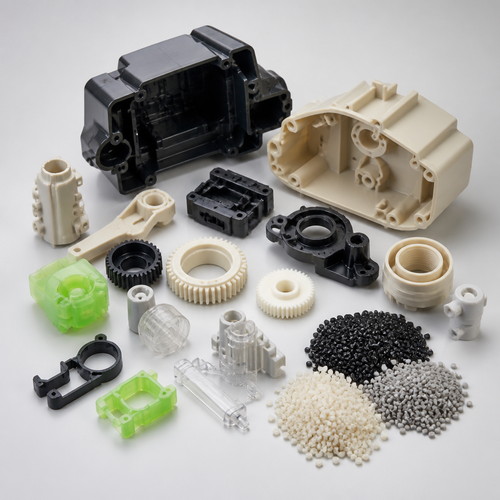
P&M is an injection-molding manufacturer of car player plastic part components for car audio and infotainment brands. The range covers front bezels, faceplates, buttons, knobs, LCD windows, and housings molded in ABS, PC/ABS, and PMMA with class-A finishes, tight tolerances, and IATF 16949 quality.
Send Inquiry
Product Description
P&M is an injection-molding manufacturer that builds car player plastic part programs around one promise: components that fit, finish, and pass inspection the first time. We supply car audio makers, aftermarket brands, and Tier 1 infotainment suppliers with plastic parts that match the drawing, the gloss target, and the launch schedule.
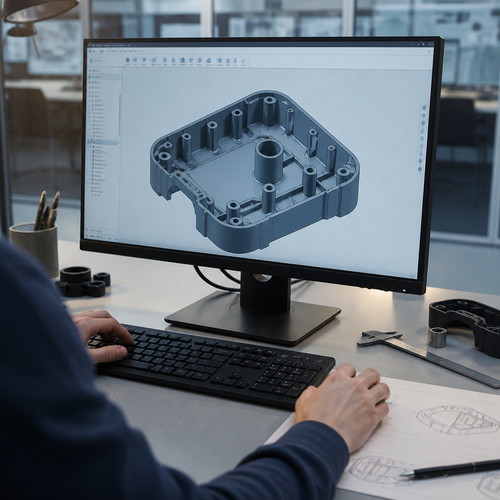
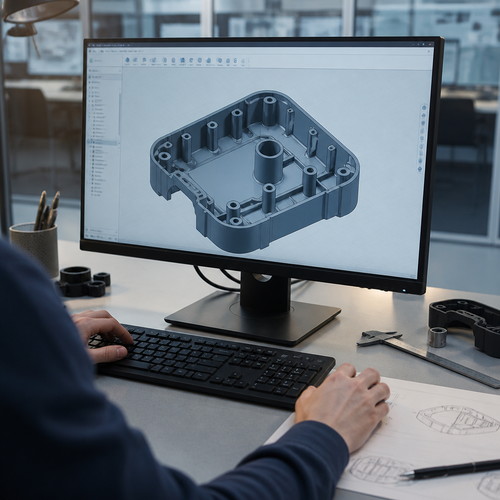
Every car player plastic part project starts with a design-for-manufacturing review. Our engineers check wall thickness, draft angle, gate location, sink risk, and light-pipe clearance before a single tool is cut. That front-end discipline keeps cosmetic defects and assembly problems out of the back end, where corrections are slow and expensive.
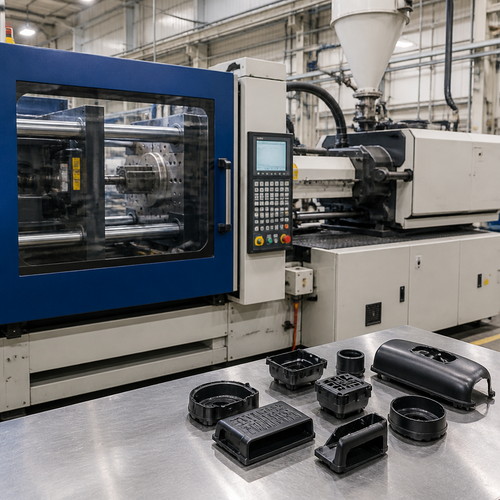
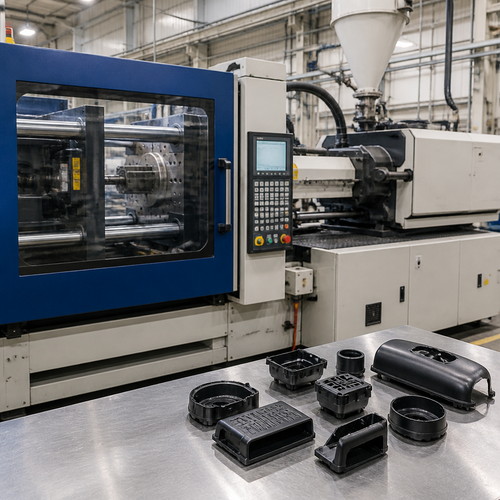
We mold car player plastic part components on 50 to 1,300 ton presses using hot-runner systems and scientific molding controls, holding critical dimensions to ±0.05 mm on the features that matter: button travel, knob seats, display apertures, and connector openings. Our material library spans ABS, PC/ABS, PC, PMMA, ASA, POM, and glass-filled PA where structural brackets are required.
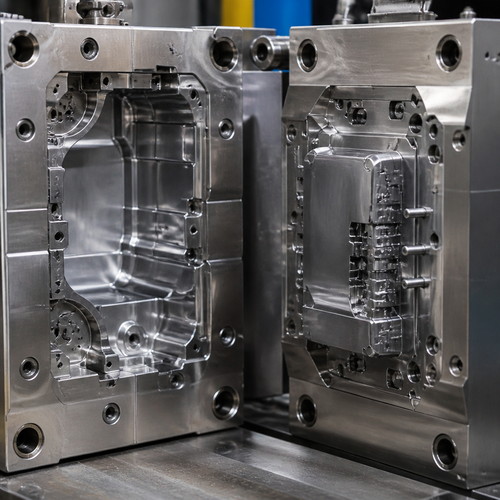
Customers choose P&M for car player plastic part work because we control the entire chain: tool design, tool making, molding, painting, laser etching, printing, ultrasonic welding, and final assembly. Typical programs include in-dash head unit bezels, faceplate assemblies, volume and tuning knobs, control buttons, SD and USB port trims, display windows, and mounting frames.
Whether you need 3,000 pieces a year or 3 million, we scale cavitation and automation to your volume instead of forcing your forecast into ours. Quality at P&M is a system, not a checklist: APQP, PPAP, capability studies, and traceability from resin lot to shipped carton. Talk to us before your next car player plastic part program locks its design.
P&M Car Player Plastic Part Molding Introduction
The car player has changed more in the last fifteen years than in the previous fifty. What was once a single-DIN radio with two knobs and a tuning dial is now a connected infotainment console with touch displays, streaming services, navigation, voice control, and smartphone integration. Yet one thing has not changed: the driver and the passenger still judge the unit with their eyes and their fingertips. That is why the car player plastic part around the screen, the buttons, and the dials carries more weight than its cost suggests.
Car audio is a market of two halves. The first half is original equipment, where head units, amplifiers, and display modules are designed into a vehicle platform years ahead of production and must survive a decade of heat, cold, vibration, and UV exposure. The second half is the aftermarket, where hundreds of brands compete on appearance, brand identity, and price, and where a single high-gloss faceplate can decide whether a product looks premium on a retail shelf. Both halves depend on the same manufacturing discipline, and both are served by the same category of parts.
The requirements on a car player plastic part are unusually demanding because the part is both structural and cosmetic. It has to hold a display at the correct angle and depth, locate buttons so they travel smoothly for the life of the vehicle, house connectors and screws that carry mechanical loads, and do all of this while presenting a flawless surface under direct sunlight and under the reflection of a showroom light. A sink mark above a mounting boss, a weld line across a glossy bezel, or a visible flow mark near an edge is enough to fail an aesthetic inspection even if the part measures perfectly.
Material strategy is where good programs are won. General-purpose ABS offers excellent surface quality and low cost, which makes it a natural fit for faceplates, buttons, and non-structural trims. PC/ABS blends add impact strength and heat resistance, so they are chosen for bezels that sit close to a display or an amplifier and need to resist warpage in a hot dashboard. Polycarbonate brings clarity and rigidity to light pipes and optical elements, while PMMA delivers the optical purity and scratch resistance needed for display windows and lenses. In many designs, a PC window co-molded into an ABS or PC/ABS bezel is the cleanest way to combine a scratch-resistant lens with a low-cost frame. Where a dash-mounted part faces long-term UV exposure, ASA holds color and gloss far better than standard ABS.
The car player has changed more in the last fifteen years than in the previous fifty. What was once a single-DIN radio with two knobs and a tuning dial is now a connected infotainment console with touch displays, streaming services, navigation, voice control, and smartphone integration. Yet one thing has not changed: the driver and the passenger still judge the unit with their eyes and their fingertips. That is why the car player plastic part around the screen, the buttons, and the dials carries more weight than its cost suggests.
Car audio is a market of two halves. The first half is original equipment, where head units, amplifiers, and display modules are designed into a vehicle platform years ahead of production and must survive a decade of heat, cold, vibration, and UV exposure. The second half is the aftermarket, where hundreds of brands compete on appearance, brand identity, and price, and where a single high-gloss faceplate can decide whether a product looks premium on a retail shelf. Both halves depend on the same manufacturing discipline, and both are served by the same category of parts.
The requirements on a car player plastic part are unusually demanding because the part is both structural and cosmetic. It has to hold a display at the correct angle and depth, locate buttons so they travel smoothly for the life of the vehicle, house connectors and screws that carry mechanical loads, and do all of this while presenting a flawless surface under direct sunlight and under the reflection of a showroom light. A sink mark above a mounting boss, a weld line across a glossy bezel, or a visible flow mark near an edge is enough to fail an aesthetic inspection even if the part measures perfectly.
Material strategy is where good programs are won. General-purpose ABS offers excellent surface quality and low cost, which makes it a natural fit for faceplates, buttons, and non-structural trims. PC/ABS blends add impact strength and heat resistance, so they are chosen for bezels that sit close to a display or an amplifier and need to resist warpage in a hot dashboard. Polycarbonate brings clarity and rigidity to light pipes and optical elements, while PMMA delivers the optical purity and scratch resistance needed for display windows and lenses. In many designs, a PC window co-molded into an ABS or PC/ABS bezel is the cleanest way to combine a scratch-resistant lens with a low-cost frame. Where a dash-mounted part faces long-term UV exposure, ASA holds color and gloss far better than standard ABS.
P&M Car Player Plastic Part Molding(Specification)
|
Mould Name |
Car Player Plastic Part Molding |
|
We promise |
All customer-centric, never for short-term profit, and sell long-term benefits |
|
We produce |
Mold, prototype, injection molding, product assembly, surface printing, spraying the surface integration |
|
Pls provide |
2D, 3D, samples, or the size of the multi-angle pictures |
|
Mould Time |
About 25 working days |
|
Product time |
7-15 Days |
|
Moud precision |
±0.1mm |
|
Mould life |
50-100 million shots |
|
Producing Process |
Audit drawings - mold flow analysis - design validation - Custom Materials - mold processing - core processing - electrode machining - Runner system processing - parts processing and procurement - machining acceptance - cavity surface treatment process - complex mode Die - The entire mold surface coating - Mounting plate - mold sample - sample test - sending samples |
|
Mould cavity |
One cavity, multi-cavity or same different products be made together |
|
Mould material |
P20,2738,2344,718,S136,8407,NAK80,SKD61,H13 |
|
Runner system |
Hot runner and cold runner |
|
Base material |
P20,2738,2344,718,S136,8407,NAK80,SKD61,H13 |
|
Finish |
Pitting the word, mirror finish, matte surface, striae |
|
Standard |
HASCO, DME or dependent upon |
|
Main thechnology |
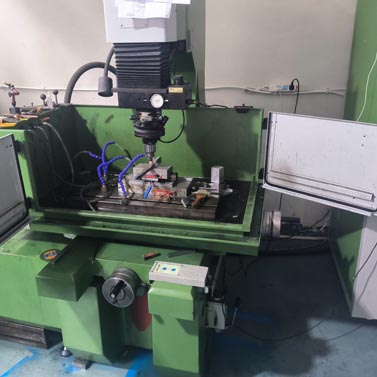
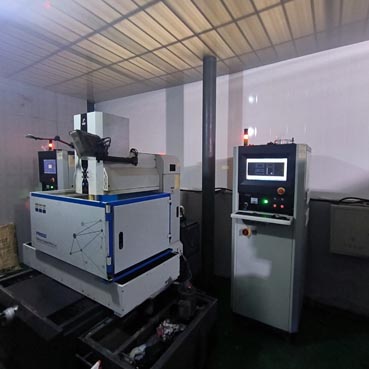
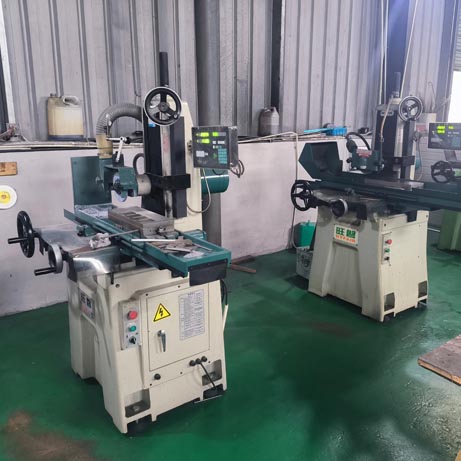
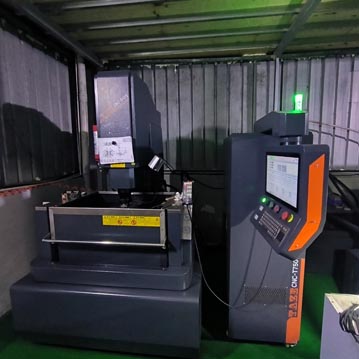
Milling, grinding, CNC, EDM, wire cutting, carving, EDM, lathes, surface Finish, etc. |
|
Software |
CAD,PRO-E,UG Design Time: 1-3 days (normal circumstances) |
|
Product material |
Food grade plastic raw materials |
|
Origin |
Made in China |
P&M Car Player Plastic Part Feature And Application
The value of a car player plastic part comes down to specific, measurable features and the applications those features unlock. Below is how P&M approaches both.
### Core Features of Our Car Player Plastic Parts
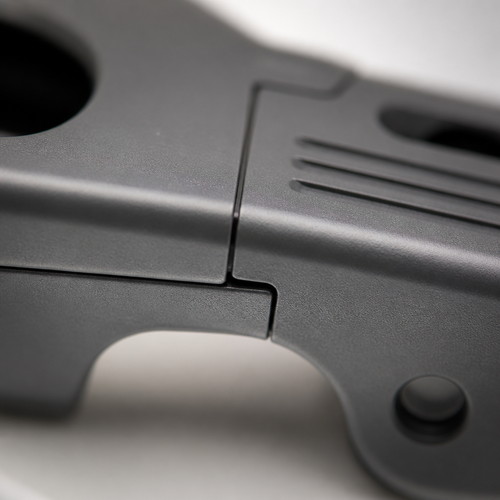
Class-A cosmetic molding. We produce high-gloss, matte, and textured surfaces that pass visual inspection under direct light, using polished tool steel, balanced fill, and documented process windows to eliminate sink marks, silver streaks, and visible weld lines.
Tight, repeatable tolerances. Critical features such as button bores, knob seats, display apertures, and mounting holes are held to ±0.05 mm where required, with capability studies behind the numbers.
Engineered material selection. We mold ABS, PC/ABS, PC, PMMA, ASA, POM, and glass-filled PA. Each grade is matched to the part's temperature range, UV exposure, impact target, and cost ceiling.
Multi-shot and co-molding. Two-color molding, overmolding, and insert molding let us combine a scratch-resistant lens with a structural frame, or a soft-touch grip with a rigid housing, in a single cycle.
Light pipes and optics. PC and PMMA light guides are molded with controlled wall thickness and surface finish so icons and indicators illuminate evenly without hotspots.
Decorative finishing. In-mold decoration, spray painting, pad printing, screen printing, and laser etching deliver brand marks, legends, and accents with sharp edges and consistent color.
Integration and assembly. Snap-fits, living hinges, ribs, bosses, and molded-in threads reduce part count, and ultrasonic welding and screw assembly are completed in house.
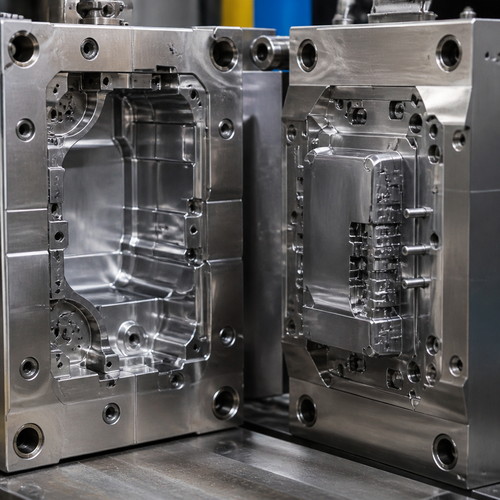
Tooling built for volume. Our tool shop builds hardened, multi-cavity molds with optimized cooling and hot-runner systems, validated by mold-flow analysis before steel is cut.
Full documentation. APQP, PPAP, MSA, control plans, dimensional reports, material certificates, and lot-level traceability come standard.
Scalable capacity. With presses from 50 to 1,300 tons, we serve low-volume aftermarket builds and multi-million-piece OEM programs through the same process window.
### Applications Across Car Audio and Infotainment
In-dash head units. Structural bezels, chassis frames, and mounting cages hold the display, mainboard, and connectors in precise alignment while meeting crash and vibration requirements.
Faceplates and front panels. The visible front of a car player is a cosmetic part where gloss level, texture, color match, and edge quality decide perceived value.
Control knobs and dials. Volume and tuning knobs need concentricity, smooth rotation, detent feel, and molded-in splines or inserts that survive years of daily use.
Buttons and keypads. Source, track, and preset buttons require consistent travel, tactile feedback, and legends that do not wear off.
Display windows and lenses. PC or PMMA windows with anti-glare or anti-reflective treatment protect the screen while keeping optical clarity.
Port trims and connector housings. USB, SD, AUX, and memory-card openings need dimensionally stable trims that align with the mating connector for a flush fit.
Mounting brackets and adapter frames. Dash kits, ISO adapters, and double-DIN conversion frames use glass-filled PA or PC/ABS for stiffness.
Portable and detachable players. Battery covers, docking shells, and clip-on housings benefit from tough blends and clean cosmetic surfaces.
Amplifiers and signal processors. End panels, grille trims, and terminal covers combine heat resistance with a premium look.
Aftermarket and custom builds. Low-volume and private-label programs use our flexible tooling, giving small brands the same engineering rigor as high-volume OEMs.
Rear-seat entertainment. Overhead and headrest display housings combine structural mounting with cosmetic faceplates and light guides.
### Process And Quality Workflow
Reliable car player plastic part production comes from a disciplined sequence, and P&M follows the same path on every program.
1. DFM and feasibility. We review your CAD, tolerance stack, material callout, and volume, then flag risks such as thin walls, undrafted surfaces, unbalanced flow, and cosmetic hazards before tooling is committed.
2. Mold-flow and cooling analysis. Simulation predicts fill pressure, weld-line location, warpage, and cooling time, so design corrections happen in software rather than in steel.
3. Tool design and build. Our tool shop produces hardened, multi-cavity molds with optimized cooling channels and hot-runner gates, balancing cavitation against your forecast.
4. T1 sampling and iteration. First-shot samples are dimensionally measured and compared to print. Adjustments are made in a controlled loop until the process window is stable and cosmetics are approved.
5. PPAP and validation. We submit dimensional reports, capability studies, material certificates, and control plans, supporting your APQP gate reviews without last-minute gaps.
6. Serial production. Scientific molding, cavity pressure monitoring, and statistical process control keep the millionth car player plastic part shipment matching the first.
7. Continuous improvement. Cycle-time reduction, scrap analysis, and tool maintenance planning continue after launch to protect cost and quality over the program's life.
### Frequently Asked Questions About Car Player Plastic Parts
What materials do you mold for a car player plastic part? We commonly run ABS, PC/ABS, PC, PMMA, ASA, POM, and glass-filled PA, and we help select the grade that meets your temperature, UV, impact, and cosmetic targets at the lowest reasonable cost.
Can you match a specific gloss level or texture? Yes. We mold to piano-black high gloss, matte, and textured finishes, matching your MT or VDI sample and controlling the process window so appearance stays consistent across the batch.
What production volumes can you support? Our press range of 50 to 1,300 tons lets us serve low-volume aftermarket builds and multi-million-piece OEM programs from the same process window.
How are tolerances and quality documented? Critical dimensions are held to ±0.05 mm where required, and every program is delivered with dimensional reports, capability studies, material certificates, and lot-level traceability.
Can you handle engineering changes mid-program? Yes. Because tooling, molding, finishing, and assembly stay in house, we respond to design changes quickly and keep the launch timeline intact.
### Why P&M for Car Player Plastic Parts
P&M is an injection-molding manufacturer that treats car player plastic part work as an engineering program, not a commodity. We start with design-for-manufacturing, validate with mold-flow analysis, mold with scientific process control, finish with painting and laser etching, and close with documentation your quality team can defend.
Because we manage tooling, molding, secondary operations, and assembly in house, lead times stay short and accountability stays with one partner. When an engineering change arrives mid-program, you get a fast, measured response rather than a chain of subcontractors and excuses.
From prototype to serial production, our engineers work as an extension of your team. Share your drawings, volumes, and performance targets, and we will return a manufacturable plan, a realistic timeline, and a transparent quote.
Ready to move forward? Send your specifications to P&M and discover how reliable car player plastic part production can shorten your launch and strengthen your supply chain.
Customization Process
Factory&About US
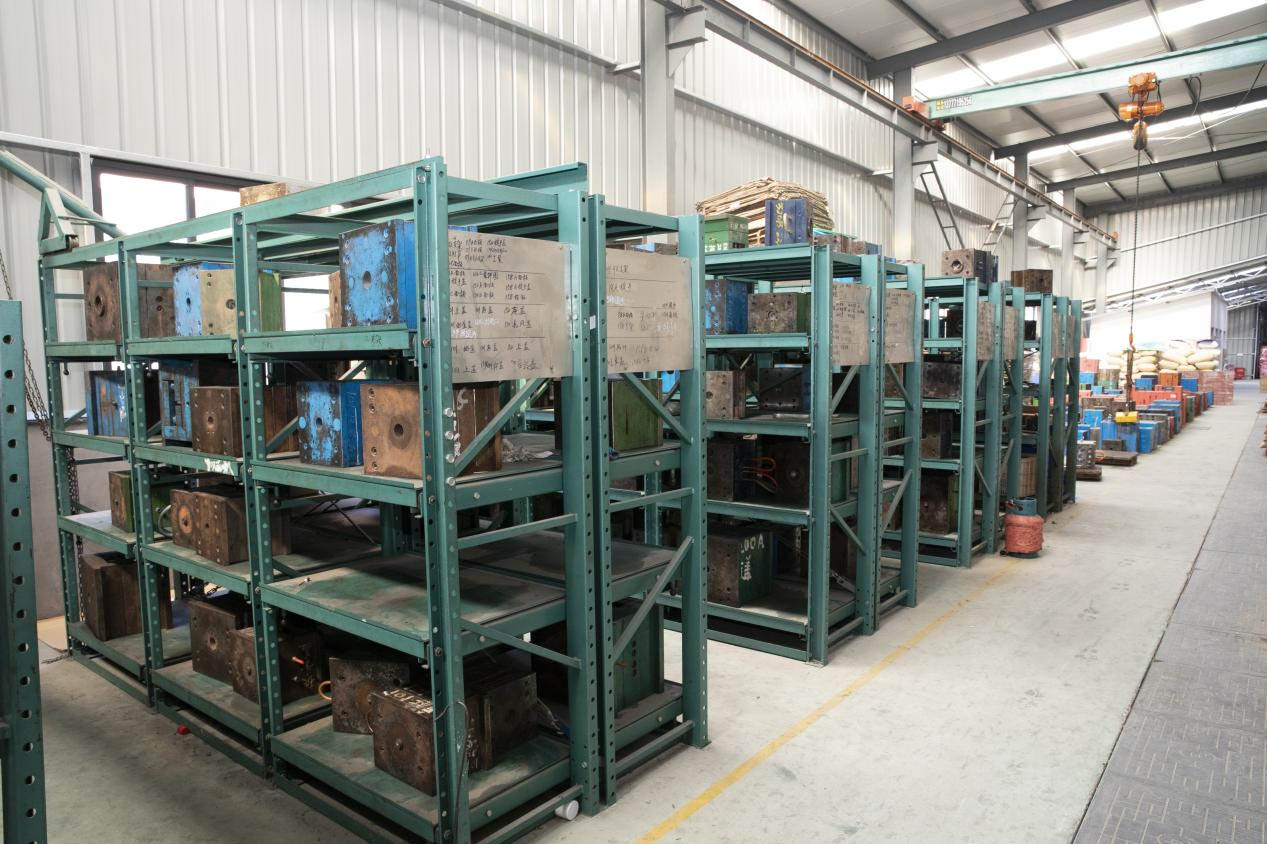
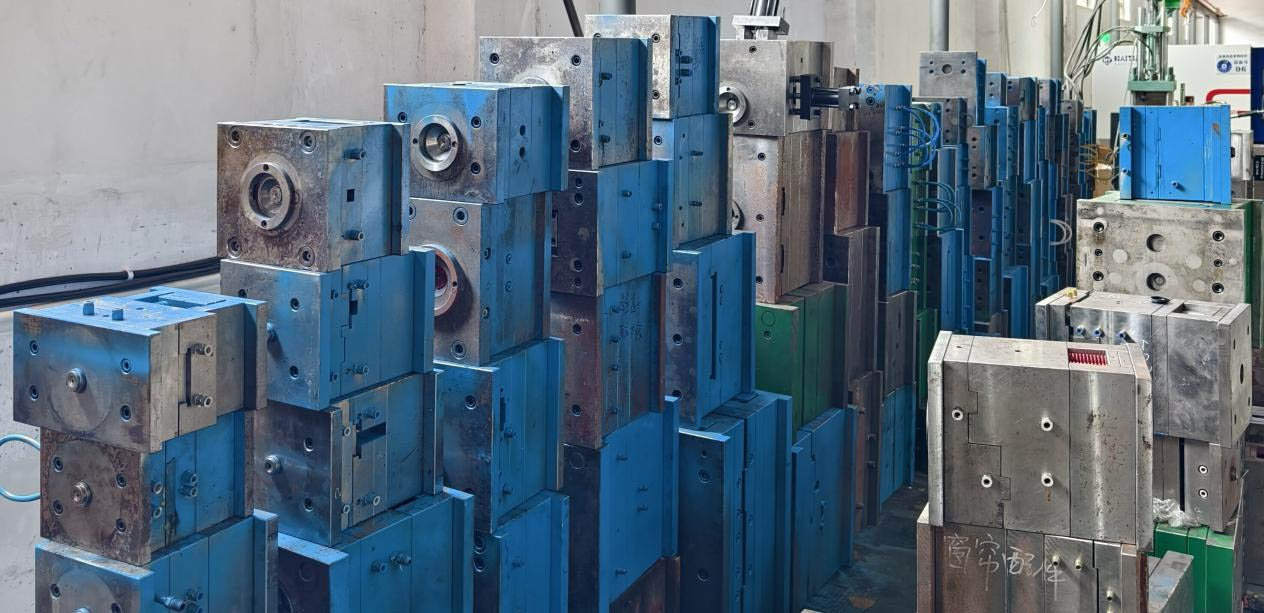
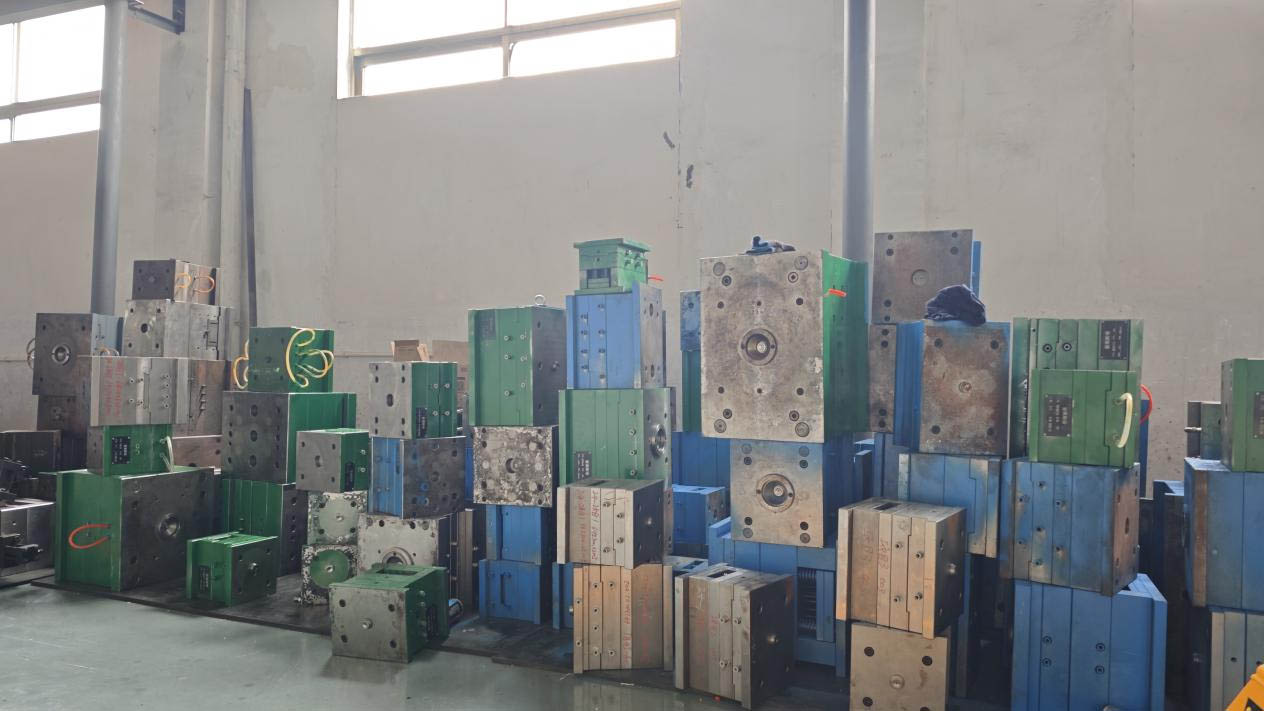
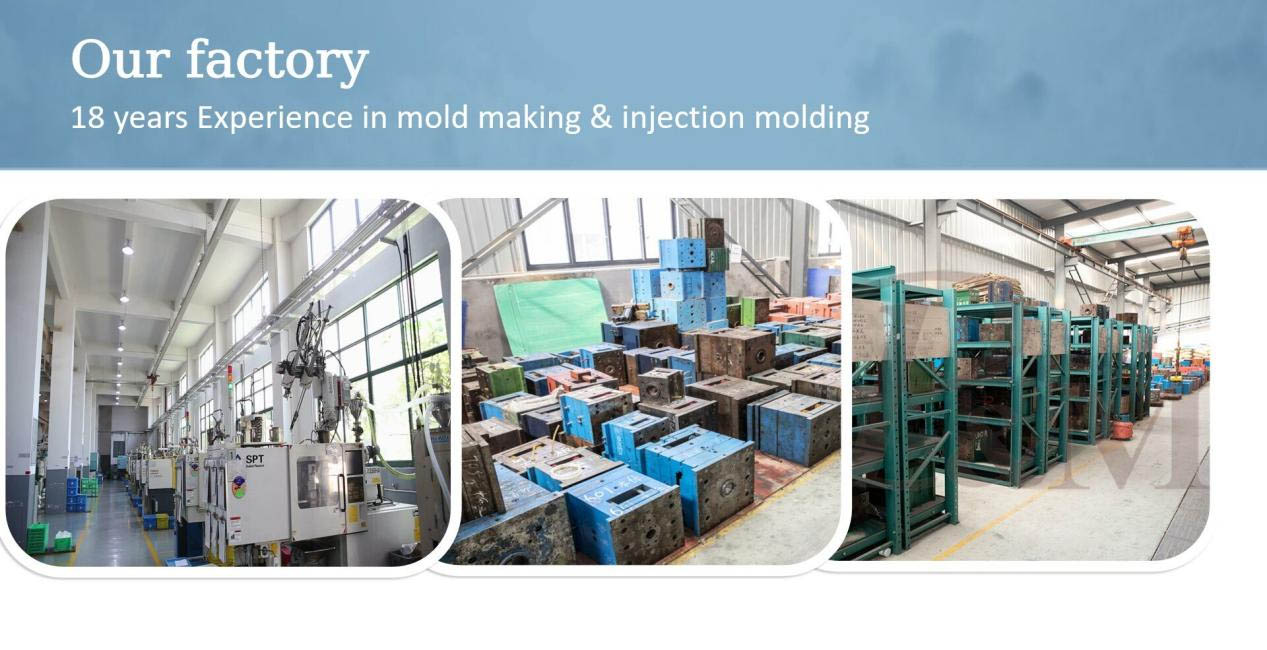
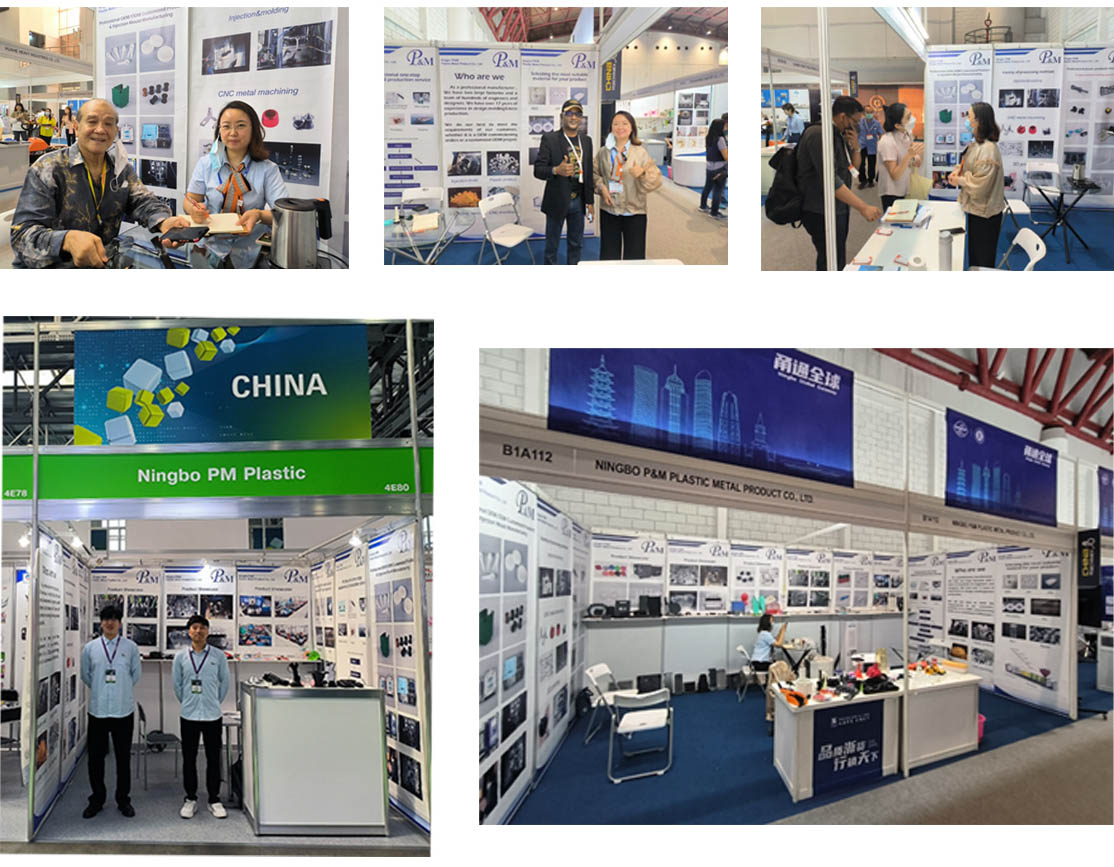
NingBo Plastic Metal Product Co.,Ltd (P&M) is located in Yuyao, the so-called Mould City, Plastic Kingdom, in the southern tip of Hangzhou Bay Bridge,north of Shanghai, the east of Ningbo Port,tight double line of State Road 329 on land, sea and air trafic into a network to facilitate transport.
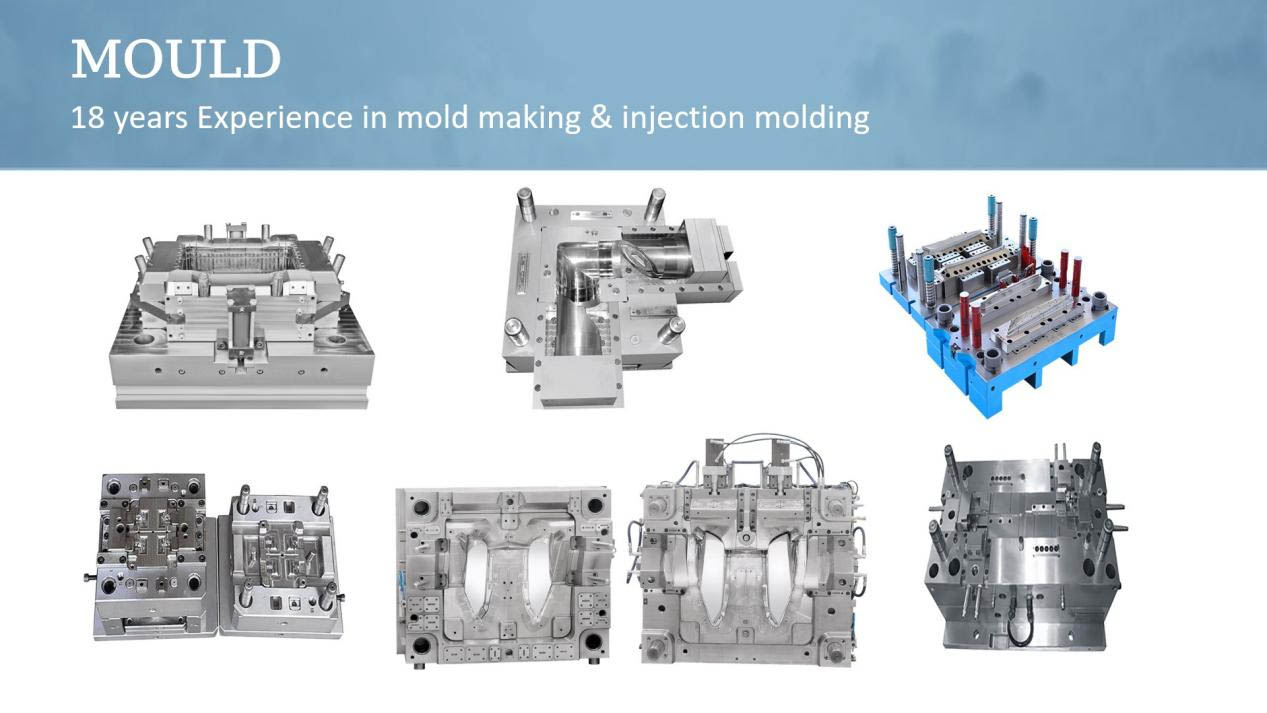
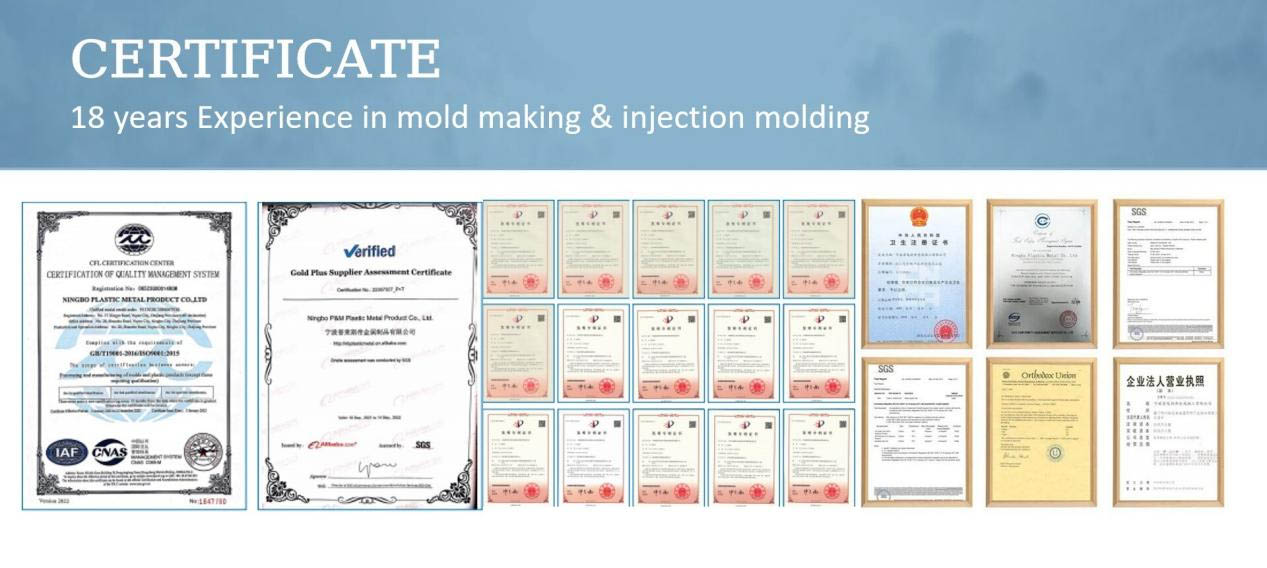
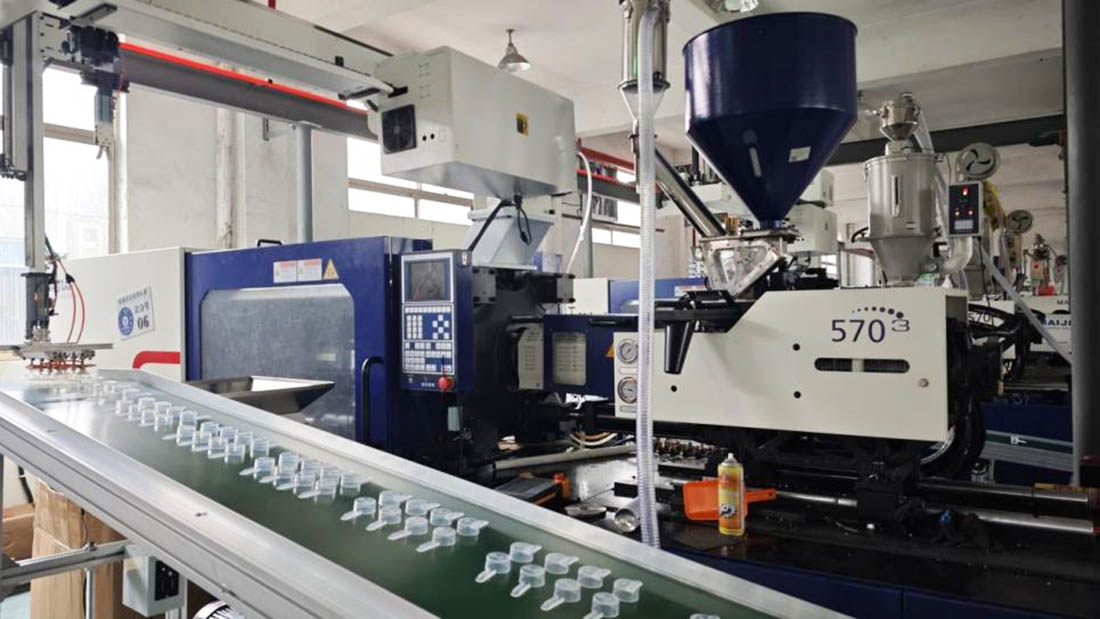
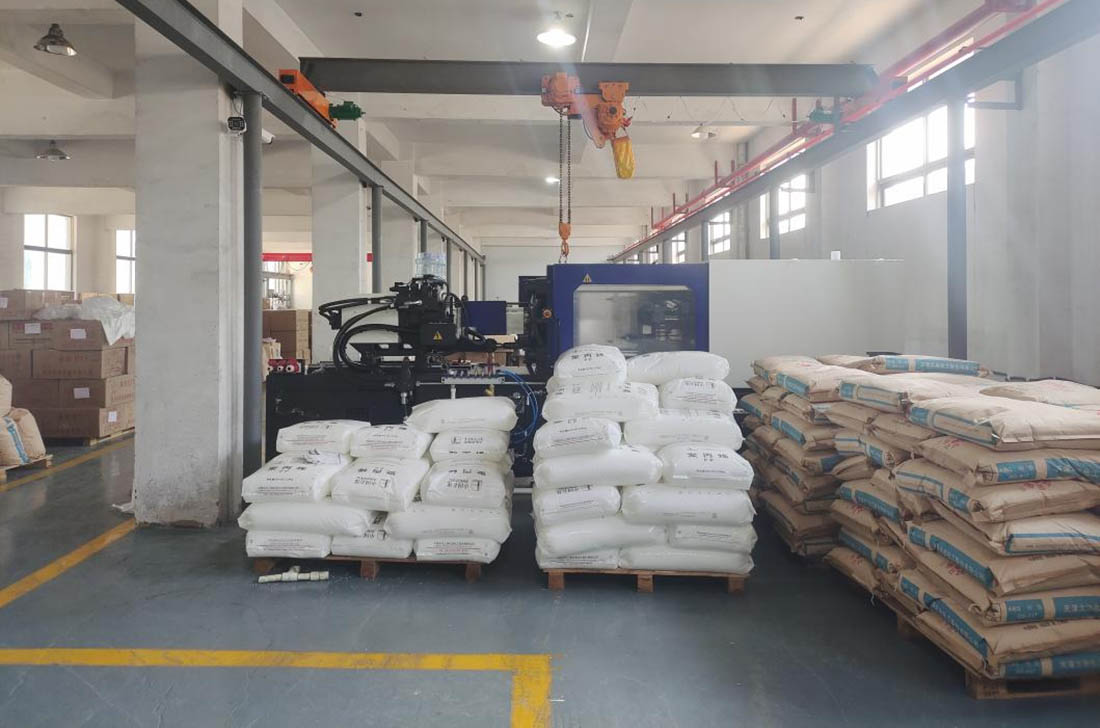
By the abundant technical strength,scientific management methods and good after-sales service, product deeply trusted and welcomed by customers from all over the world. P&M holds improved system of development and production, to achieve mold design, plastic products manufacturing and automatic production. Our main products is design and manufacturing of plastic mold, plastic product, metal product. 90% products of our enterprise are exported to America, Europe, Germany, Japan, Australia, etc. For many years, the company has been committed to the research of raw materials. The company has its own trademark and dozens of patents, providing more convenient technical support for mold making and product production. P&M started domestic business from 2008,named Shundi Mould Factory. And opened the international market from 2014. We always adhere to the principles of quality first and time first. While providing customers with the highest quality products, try to maximize the production efficiency and shorten production time. We are proud to tell every customer that our company has not lost any customer since its establishment.If there is a problem with the product, we will seek a solution actively and take responsibility to the end.
P&M adheres to market-oriented to the quanlity of life and focus on quality service and continuous development of new products,determined to establish a better corporate image,and our friends at home and abroad to carry a wide range of business exchanges and cooperation, create brilliant.
Packing
Packaging according to your needs
1. By air ,it takes 3-7 days for delivery.
The goods can be shipped by DHL , Fedex , UPS .
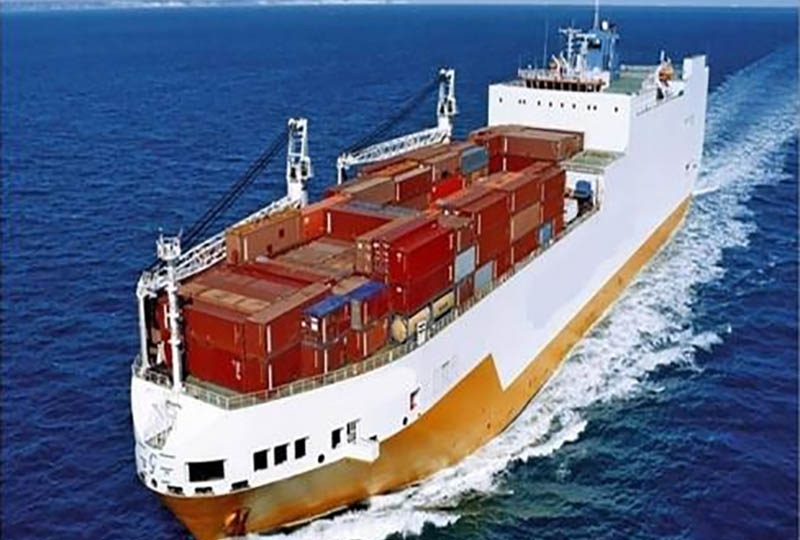
2. By sea ,the delivery time is based on your port.
To South East Asian Countries takes about 5-12 days.
To Middle east countries takes about 18-25 days.
To European countries takes about 20-28 days.
To American countries takes about 28-35 days.
To Australia takes about 10-15 days.
To African countries takes about 30-35 days.
P&M Bike parts, centered around children, balances safety, health, and fun, aiming to add a bright color to children's beautiful childhood. We look forward to working together with you to serve our children.
The path of a child's growth is paved with bricks and tiles.

FAQ
1.Who are we?
We are based in Zhejiang, China, start from 2014,sell to North America(30.00%),Southern Europe(10.00%),Northern Europe(10.00%),Central America(10.00%),Western Europe(10.00%),Mid East(10.00%),Eastern Europe(10.00%),South America(10.00%). There are total about 51-100 people in our office.
2.How can we guarantee quality?
Always a pre-production sample before mass production;
Always final Inspection before shipment;
3.What can you buy from us?
Mould, Plastic Product, Metal Product, Dental Product, CNC machining.
4.Why should you buy from us not from other suppliers?
We main do all kinds of 3d design, 3d printing and plastic metal molds tooling and products. We have our own engineer and factory. One-stop supply: 3d design - 3d printing - mold making - plastic injection.
5.What services can we provide?
Accepted Delivery Terms: FOB,CFR,CIF,EXW,FCA,DDP,DDU;
Accepted Payment Currency: USD, EUR;
Accepted Payment Type: T/T,L/C,PayPal,Western Union,Escrow;
Language Spoken:English,Chinese,Spanish,French,Russian.
6.What are the characteristics of your service?
1. Your inquiry related to our products or prices will be replied within 24 hours.
2. Well-trained and experienced staffs to answer all your enquiries in fluent English.
3. Offering the support to solve the problem in the application or selling period.
4. Competitive prices based on same quality.
5. Guarantee samples quality same as mass production quality.
Hot Tags: Car Player Plastic Part, China, Manufacturer, Supplier, Factory, Customized, Wholesale, Buy, Quality, Latest Selling, Made in China
Related Category
Send Inquiry
Please feel free to give your inquiry in the form below. We will reply you in 24 hours.